 D2DCon
 Golden Door Summit
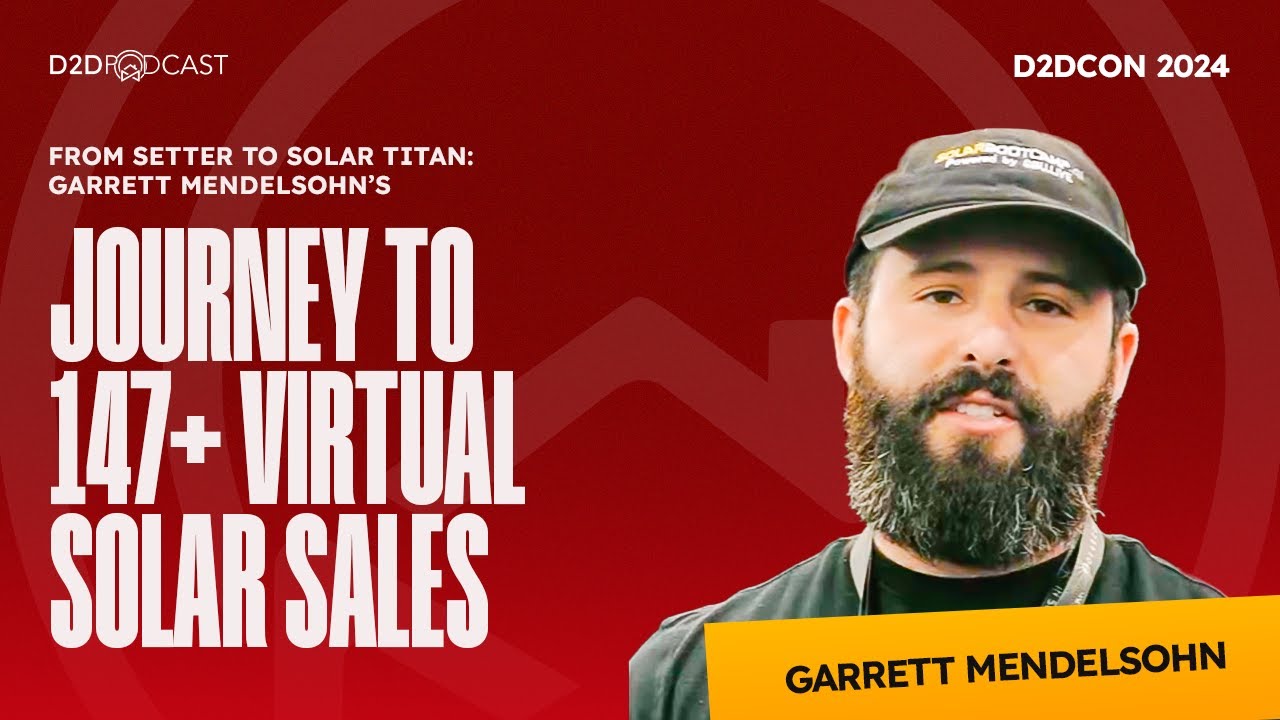
Virtual Solar Sales: How to Close 103 Deals by Phone
- 103 deals in a quarter: Garrett Mendelsohn closed 103 solar deals in his first quarter plus two weeks, all over the phone.
- No knocking required: He stopped knocking and ran 10 to 20 phone appointments a day instead.
- Sell from anywhere: A virtual platform lets a rep sell in 33-plus states without leaving home.
Most door-to-door reps think the doors are the only way in. Garrett Mendelsohn used to think the same thing, right up until a friend showed him an online ad and he closed 103 solar deals in a single quarter without knocking once. He did it over the phone, from home, and then built a company to teach it.
On The D2D Podcast, Garrett broke down how he made the jump from setting appointments in Ogden, Utah to running a virtual solar operation. This guide pulls the practical parts out of that conversation: what virtual solar sales actually is, how a rep moves into it, and what it takes to sell solar without a truck, a territory, or a single blitz.
What is virtual solar sales?
Virtual solar sales is closing solar deals remotely, by phone or screen, instead of at the door. The rep works leads that come in online, runs the appointment over the phone, and never drives a neighborhood.
Garrett learned the difference the hard way. He had spent years knocking before he realized online leads were even an option.
The shift came from one video. A friend was over and saw an ad for online lead generation, and the pitch was simple: the number of Google searches for solar climbs every year, which means homeowners are starting the conversation on their own. For a rep used to interrupting people at dinner, that was a new idea. People were raising their hands before anyone knocked.
How to move from door-to-door to virtual solar sales
The move starts with leads you do not have to generate by walking. Garrett ran his first online campaign in the fourth quarter, which he called the worst time to try it, and still closed about 15 sales a month in October, November, and December.
That was enough to convince him. He stopped knocking and leaned fully into phone appointments. The volume is what stands out. Garrett was booking 10 appointments a day, and on some days 20, double and triple booking slots to get as many sits as possible. The result was one to three sales a day, and a best month that cleared 38.
Add it up and the quarter speaks for itself.
A few things make that pace possible. The rep is not losing hours to driving or walking, so the calendar fills with conversations instead of steps. Leads arrive pre-interested, so the pitch starts warmer than a cold door.
And booking is cheap, so a rep can overbook on purpose and still keep a full day of sits even when some appointments fall through. If you want to sharpen the actual conversation that happens on those calls, the same skills carry over from the porch; the rebuttals in the top solar sales objections guide work on the phone too.
How live-streaming solar sales works
After Garrett started teaching what he knew, he and his team built a sales platform around it, and the format is unusual: live-streamed selling. He compares it to a gaming stream.
In plain terms, a rep can watch another rep run a real solar call in real time. There are sound effects and commentators, and the team is gamifying the experience so reps stay engaged while they learn. It turns a solo grind into something closer to a sport you can watch and copy.
The platform goes further than streaming. It lets reps sell across 33-plus states and run commercial deals in roughly 50, with the ability to make overrides and build a team inside the system. Garrett also described a metaverse layer where reps meet, talk, and watch streams together, which he expects to matter more as VR and AR headsets reach more people. The headline feature is still simple, though: watch someone close, then go close.
What it takes to start selling solar remotely
The barrier to entry is low. On the question of experience, Garrett was direct: it could be anybody. His students come from no sales background, from car sales, and from other industries entirely, along with door-to-door reps looking for a way off the street.
The split surprised even him.
On the practical side, Garrett suggested setting up an entity like an LLC for tax purposes, but no license or portfolio is required to start learning. The platform itself, SBU.live, runs 49 dollars a month for access to the sales system, the live streaming, the bootcamp training, hundreds of course videos, Monday through Friday live sessions, and scripts.
Garrett also runs live sales inside the program, closing real deals in front of students to prove the method works rather than just describing it. A customized track with more hands-on help is priced separately and starts with a booked call.
Benefits of selling solar from home
The clearest benefit is freedom of location. A rep who sells by phone is not tied to a market, a truck, or a neighborhood, which changes where that rep can live.
Garrett lives in Puerto Rico full time, and he says his students have moved to Costa Rica, Puerto Rico, and other places around the world while still selling.
There are trade-offs worth naming. Phone selling removes the in-person trust a door gives you, so the rep has to build rapport fast with voice alone, and lead quality now depends on a vendor instead of a street you can see.
Garrett also noted that the industry is in a rough patch in some states, with reps leaving even as new ones arrive. Virtual selling does not fix a bad market; it just lets a good rep work more markets at once. For reps who can hold a conversation and follow up, that reach is the whole point.
How to start selling solar remotely
Use these steps to test virtual solar without quitting what already works:
- Keep your income while you learn. If you are knocking now, protect that paycheck and run virtual appointments on the side until the numbers hold up.
- Line up a lead source. Virtual selling depends on inbound leads, so start with a platform or vendor that feeds you appointments instead of expecting you to generate them.
- Set up the basics. Open a simple entity like an LLC for tax purposes and get comfortable running an appointment by phone.
- Learn the remote pitch. Study reps closing live, use the provided scripts, and practice building trust with voice alone.
- Overbook on purpose. Book more appointments than you think you can handle, because some will cancel and sits are what pay.
- Track your sits-to-close rate. Watch how many appointments turn into deals each week and adjust your pitch before you scale your volume.
Frequently Asked Questions
What is virtual solar sales?
Virtual solar sales means closing solar deals remotely, usually by phone, instead of knocking doors. Reps work leads that come in online, run the appointment over the phone or screen, and never drive a territory. Garrett Mendelsohn closed 103 deals in a quarter this way, selling in multiple states from home without a single blitz.
Can you really sell solar over the phone without knocking?
Yes. Garrett stopped knocking and sold 103 deals in his first quarter plus two weeks, entirely over the phone and not over Zoom. He did it by running a high volume of inbound appointments, often 10 to 20 a day, and closing one to three of them. The method depends on a steady lead source and a tight phone pitch.
How much does a virtual solar platform cost?
Garrett's platform, SBU.live, costs 49 dollars a month. That includes the sales system, live-streamed selling, bootcamp training, hundreds of course videos, Monday through Friday live sessions, and scripts. A more customized track with extra help is priced separately and starts with a booked call rather than a flat monthly fee.
Do you need solar experience to sell remotely?
No. Garrett said his students come from no sales background, from car sales, and from outside the industry, along with door-to-door reps. He recommends setting up an entity like an LLC for taxes, but no license or prior solar experience is required to start learning the system.
How many states can a virtual solar rep sell in?
On Garrett's platform, a rep can sell residential solar in 33-plus states and run commercial deals in roughly 50. That reach is the main advantage of selling remotely: one rep can work many markets from a single location instead of being limited to one neighborhood or city.
Is virtual solar better than door-to-door?
It depends on the rep. Virtual selling removes driving time and lets you work more markets, but it also removes the in-person trust a door provides and ties your lead quality to a vendor. Door-to-door still builds stronger rapport face to face. Many reps use virtual selling to add volume or to keep selling after they stop knocking.
Conclusion
Garrett Mendelsohn's story is a reminder that the door is a tool, not the only door in. He took the same selling skills he built in Ogden, pointed them at inbound leads, and closed 103 deals in a quarter without leaving home. The model is not magic, and a weak market is still a weak market.
But for a rep who can hold a conversation and work a full calendar, virtual solar opens up states, hours, and places to live that knocking never could. Start small, keep your income, and let your sits-to-close rate tell you when to go all in.
