
 D2DCon
 Golden Door Summit
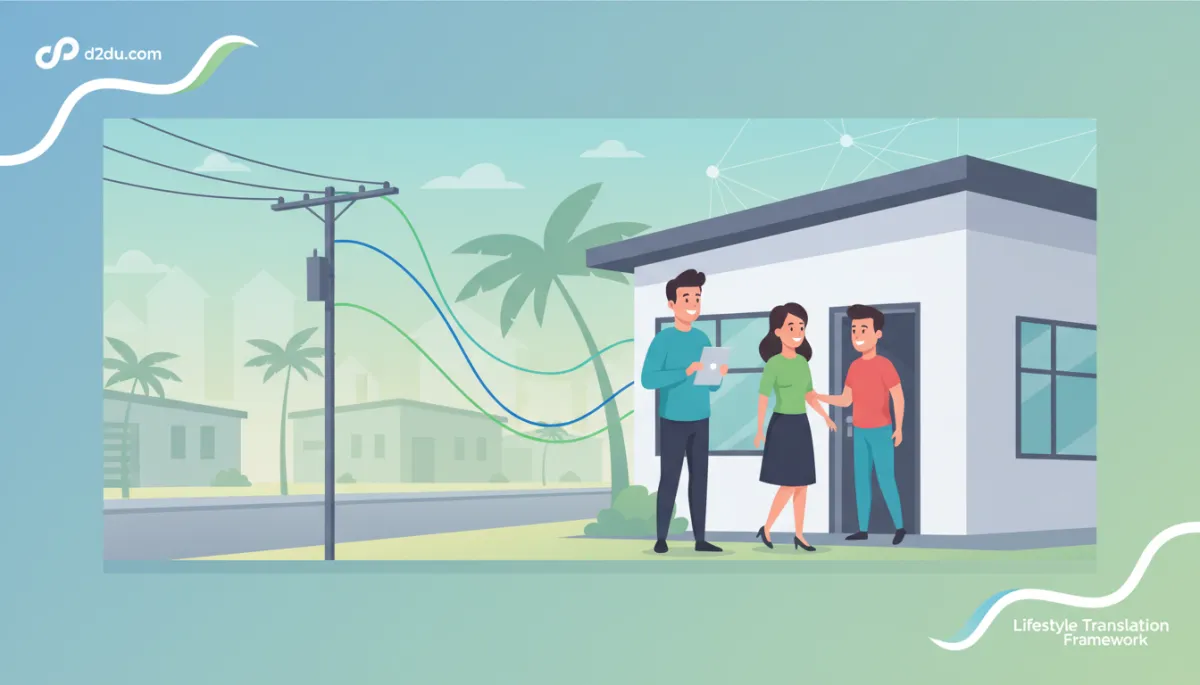
How to Sell Fiber Internet Door to Door Without Jargon
- Specs don't sell: Leading with gigabits and latency confuses homeowners, and confused homeowners delay.
- Translate, don't explain: Map every feature to a moment in the family's day, like a Zoom call that doesn't freeze.
- Get ahead of objections: Homeowners burned by hidden fees and rate hikes need answers before they ask.
Most reps think they sell fiber internet door-to-door. They don't. They sell spec sheets:
- Gigabit speeds
- Latency
- Symmetrical upload
And they lose the deal in the gap between what fiber is and what fiber does.
That gap is where the close lives. The reps who dominate the door have stopped being technicians and become translators: they've internalized one framework that turns every megabyte into a Tuesday night where nobody's buffering, nobody's lagging, and nobody's yelling about the Wi-Fi. That single shift — from selling speeds to selling the life — is the whole game.
This is the Lifestyle Translation Framework, and once it clicks, the way you sell fiber internet door-to-door changes for good: the close stops being something you do to people and becomes something they do to themselves.
Why Tech Jargon Kills Fiber Sales at the Door
Most door-to-door fiber reps lead with the specs. They proudly announce their gigabit speeds, low latency, and symmetrical upload capabilities like they just won a Nobel Prize. In their minds, they think they're being helpful. They think, "If I just prove the math and show them our tech is superior to their crappy old cable, they have to sign!" Bro, that's not how human psychology works.
Here is what is actually happening on the other side of that door. The homeowner hears a barrage of words they simply don't understand. It's like you're speaking Greek. When the human brain encounters complex jargon, it hits a brick wall. It makes the prospect feel stupid, and because human beings naturally want to avoid looking foolish, they won't ask you to clarify. They won't admit they have no idea what "symmetrical upload" means.
"You didn't lose that sale because of price, bro. You lost it because you confused the crap out of them."
Instead of having a real conversation about their internet struggles, they just nod along politely. Then they hit you with, "Let me talk to my wife," or "Leave me a flyer." Bull crap. When a prospect is confused, their default defense mechanism is to delay. If you want to drastically increase your closing percentage, you have to realize you aren't selling megabytes; you're selling a better daily experience. Drop the tech manual approach, and watch your sales skyrocket. You know what I mean?
Features vs Benefits in Fiber Internet Sales
To fix this, you've got to understand the fundamental difference between features and benefits. This matters more in fiber than almost any other D2D market. For years, ISPs trained reps to sell the infrastructure. But the infrastructure is just a feature. A feature is a cold, hard fact. A benefit is the emotional impact that feature has on the customer's life. It's like selling a gym membership—you don't sell the heavy iron weights, you sell the six-pack and the confidence, right?
Gigabyte speed is a feature. Low latency is a feature. A fiber optic line running directly to the house is a feature. While you might geek out over the engineering, the average homeowner just wants their damn internet to work. They want to stream Netflix without staring at a spinning wheel of death. They want their Zoom meetings to stop freezing when they're talking to their boss. They want their kids to stop screaming that the Wi-Fi is lagging during a Fortnite match.
Those are the benefits, guys. That is what people will actually open their wallets for. Your primary job at the door is to be a translator. You must take the cold data your company gives you and map it directly to a real-life solution for that specific family.
Let's do the math: if you're pitching 10 doors a day with tech jargon and closing 1, but you switch to lifestyle benefits and close 3, you just tripled your income without knocking a single extra door. When you make this shift, you stop being a walking billboard and start being a consultant.
| Technical Feature | Real-Life Benefit |
|---|---|
| Gigabyte Speeds | Everyone in the house can stream 4K movies at the exact same time without a single second of buffering. |
| Low Latency | Video calls don't freeze and your kids' online games run flawlessly without lagging and ruining their match. |
| Symmetrical Upload/Download | Working from home is seamless, even when you're uploading massive files or presenting on a live video call. |
| Smart Home Integration | You’ve got 15 devices pulling data right now—security cameras, smart thermostats, iPads. Fiber gives you the bandwidth to keep every single gadget online without throttling your main connection. Make sense? |
What to Ask Before You Pitch Fiber Internet
You can't translate a feature into a benefit until you know what that family's night actually looks like. So before you say one word about fiber, ask. Two or three good questions at the door tell you exactly which benefit to sell.
Keep the questions about their life, not their equipment:
- How many people are on the Wi-Fi on a normal weeknight?
- Does anyone work from home or jump on video calls?
- Any gamers or streamers in the house?
- When does the connection drop, and what's everyone doing when it does?
Then stop talking and listen. Every answer is a translation waiting to happen. If mom works from home, you're selling video calls that don't freeze in front of her boss.
If the teenager games, you're selling matches that don't lag. If the whole family streams after dinner, you're selling a night without the spinning wheel. Their answers write your pitch for you.
Paint the Picture Before You Close
Once you know their pain, play it back in their own words. Don't describe fiber. Describe their Tuesday night after the install:
When the homeowner can see that night, the close stops being a decision about internet. It becomes a decision about their family's evening, and the paperwork feels like the next step instead of a pitch.
How to Handle Common Fiber Internet Objections
Look, even if you’re selling God’s gift to Wi-Fi, you’re still gonna get punched in the mouth at the doors. Homeowners are skeptical. They’ve been burned by hidden fees, random rate hikes, and trash customer service from legacy telecom giants. If you want to close more deals, you can't just react. You need to anticipate these objections before they even open their mouths and have a bulletproof rebuttal locked and loaded. You know what I mean?
"I'm happy with my current provider."
Don't argue, and don't trash their provider. "Happy" usually means "it works most of the time," so find out what "most" means.
If the answer is yes, you've got your opening. If it's a real no, thank them and move on. Make a note, though, because "happy" rarely survives the next rate hike.
"I'm locked into a contract."
Don't walk away; get the details. Who's the contract with, when does it end and what would it cost to leave early? Some providers offer to cover part of an early termination fee, so know your company's policy cold.
Then log the date and follow up a couple of weeks before it ends. A contract objection isn't a no. It's a calendar date.
"What's the catch?"
This is the objection the legacy companies earned. Homeowners have been burned by promo prices that jumped and fees they never saw coming, so they expect the same from you.
Beat it with total transparency. Show them the real monthly number with taxes and equipment included, and tell them exactly what happens when any promo period ends.
If your plan has no data caps or equipment fees, say so out loud. Nothing kills skepticism faster than a rep who brings up the fine print first.
"Installation sounds like a hassle."
The homeowner is picturing a day off work, holes in the walls and a tech who shows up four hours late. Take that picture away by walking them through your company's real install process: how long it usually takes, what the tech does and how they pick the time.
Then book the appointment while you're standing there. The easier you make the next step, the fewer reasons they have to delay.
"I don't need that much speed."
They're right that nobody needs a gig to check email. But speed isn't the point; the whole house is. Count the devices with them.
Once they count past ten, the conversation isn't about speed anymore. It's about why the Wi-Fi drops every night when everyone gets home. You know what I mean?
How to Sell Fiber With the Lifestyle Translation Framework
Use this on every fiber door:
- Drop the spec sheet. Don't lead with gigabits, latency or symmetrical upload.
- Ask how they use the internet. Find out how the family actually uses their bandwidth.
- Translate features into benefits. Map each spec to a real moment, like streaming without buffering.
- Paint the picture. Describe a frictionless evening online so the close feels natural.
- Anticipate objections. Address hidden fees, rate hikes and service worries before they come up.
Frequently Asked Questions
What is the Lifestyle Translation Framework?
It is a way of selling fiber internet by translating technical features into everyday benefits. Instead of quoting gigabit speeds and low latency, you describe what changes in the home: streaming without buffering, video calls that don't freeze and no more arguments about the Wi-Fi. Homeowners buy the better evening, not the spec sheet.
Why do fiber reps lose sales with technical jargon?
Jargon confuses homeowners, and people who feel confused rarely ask questions. They nod along, then delay with "let me talk to my wife" or "leave me a flyer." The rep thinks the deal was lost on price, but it was lost on confusion. Plain language keeps the conversation going.
What is the difference between a feature and a benefit in fiber sales?
A feature is a fact about the service, such as gigabit speed or a fiber line to the house. A benefit is what that feature does for the family, such as Netflix without the spinning wheel or Zoom calls that hold up. Homeowners open their wallets for benefits, so translate every feature into one.
How do you handle fiber internet objections at the door?
Expect them and answer them early. Many homeowners have been burned by hidden fees, sudden rate hikes and poor customer service from legacy providers, so they are skeptical before you start. Address those worries in your pitch instead of waiting for them, and keep tying your answers back to how the home will actually feel.
Conclusion
Fiber reps don't lose deals on price as often as they lose them on confusion. Stop selling the spec sheet, ask how the family really uses the internet, and translate every feature into a better evening at home.
In Hunter's words: "You didn't lose that sale because of price, bro. You lost it because you confused the crap out of them."
