
 D2DCon
 Golden Door Summit
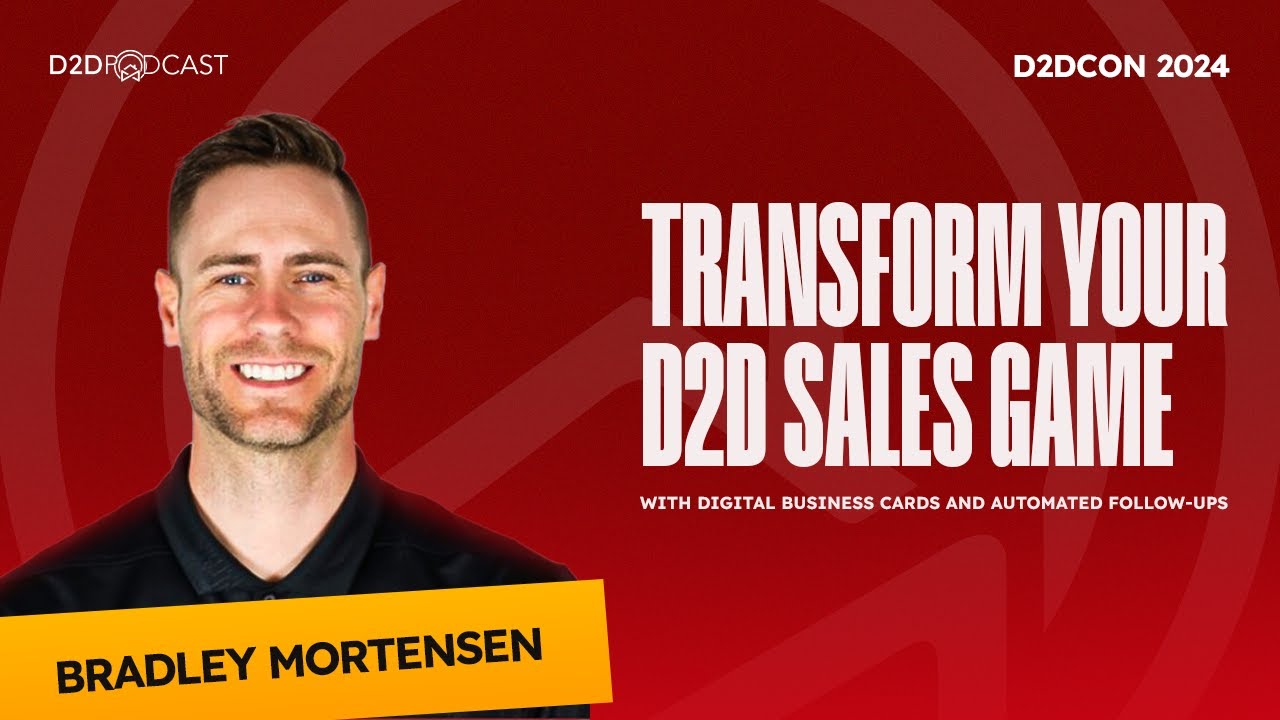
Digital Business Cards for Door-to-Door Sales Reps

- One tool, three jobs: A digital business card builds credibility, captures the lead, and shows rep-level reviews in a single tap at the door.
- Track inputs that mean something: Cards sent, open rates, and video views tell a manager who is really working, not just who claims 100 knocks.
- Reward the right behavior: Incentives tied to real activity drive reps, because people react to incentives in predictable ways.
Knock on a stranger's door and the first thing you fight is suspicion. Most homeowners treat a rep like a threat before a single word lands. A digital business card is one answer to that problem, and it is the reason RepCard exists.
On The D2D Podcast, founder and CEO Bradley Mortensen walked through how a card on a phone screen changes the first ten seconds at the door, why reviews belong to the rep and not the company, and which numbers actually tell a manager who is going to close. Mortensen started knocking in 2010, so the tool came out of the field, not a boardroom.
What is a digital business card in door-to-door sales?
A digital business card is a shareable profile a rep sends to a homeowner that carries their photo, company logo, reviews, and contact details in one link. The point is credibility. Mortensen said the first version was built to solve one feeling every knocker knows.
He built the first screens in Adobe XD on flights between sales offices in 2017, with no ability to write code. He paid a designer 300 dollars on Fiverr to clean it up, found a developer, and by 2018 had something his own reps could use. The card was never meant to replace the pitch. It was meant to make the rep look like someone worth letting back on the porch.
That early bet was not cheap. Mortensen said he was roughly 100,000 dollars into RepCard before it made a dime, and he still spent 3,000 dollars on a small booth at D2DCon 2 to get it in front of door-to-door people. The booth stayed packed the whole event, which told him the credibility problem he felt in the field was one every rep felt too. The product was built by a knocker for knockers, and that origin is the reason it fixes real porch problems instead of imaginary ones.
Why reps sell themselves before the product
Homeowners buy the person first and the product second. That is why RepCard puts reviews on the individual rep instead of the company. Mortensen is blunt about the order of operations at the door.
A company can run a clean brand and still have weak reps mixed in, so a five-star company logo does not tell a homeowner much about the person standing in front of them. Rep-level reviews do. Think of it as a reputation card for one salesperson: the profile picture, the company logo, and real reviews tied to that name. When a homeowner can see that other neighbors trusted this specific rep, the "come back later" starts to feel less like a brush-off and more like a real second appointment.
How a digital business card captures leads without the awkward ask
The card captures a lead through an exchange instead of a demand. Asking a homeowner for their phone number cold feels like taking something. Offering to send your card feels like giving something, and the contact info comes back with it. Mortensen framed the difference in plain terms.
He described the go-back moment every rep hits: the homeowner says come back in three hours. Ask for a number outright and it feels like you are reaching into their pocket. Send a digital business card so they have your details, and getting theirs in return is seamless. The homeowner gets something useful, the rep gets a real lead, and nobody feels cornered. That small shift in framing is the difference between a vague maybe and a contact you can actually follow up with later that day.
The door-to-door metrics that actually predict who closes
Activity numbers only help when you can trust them, and a self-reported knock count is easy to inflate. RepCard tracks the inputs a manager cannot fake, starting with how far a rep was from the door when they logged the knock.
From there, a leaderboard shows cards sent, open rates, video views, and how many times a homeowner interacted with a card. If a rep claims 100 knocks but sent only 62 cards and almost nobody opened them, the problem shows up without the manager ever riding along. Mortensen made the point that this data replaces guesswork for leaders running reps in other states.
The next step he described is pulling outcomes back in, not just inputs. Doors knocked and video views measure effort. Deals signed and kilowatts sold measure results. When the platform can read a signed solar deal, say a 10 kilowatt system at 40,000 dollars, a team can rank reps by revenue instead of busywork. That is the number owners actually care about, because they want rewards tied to activity that makes money.
How gamification and one-app workflows keep reps consistent
Reps repeat what gets rewarded, so RepCard added competitions, incentives, and chat to keep daily activity high. Mortensen said the whole feature traces back to a single lesson that stuck with him.
A manager can set a competition for the day or the week, tie it to a real KPI, and let reps redeem the reward through the platform from a library of more than a thousand gift card vendors. Run a Fast Cash Friday, hand the winner a 250 dollar reward, and one rep spends it at a sporting goods store while another buys groceries. It behaves like cash, so it motivates without the owner cutting checks by hand.
The other half is keeping reps out of ten different apps. RepCard integrates with proposal tools so a rep can start a proposal without re-entering data, and it can link out to training platforms like D2D University so reps log in from one place.
Mortensen tied the whole philosophy back to the rep on the porch: the easier the tools are to use, the more a team gets done. Every extra tab is a reason to skip a step.
How to put a digital business card to work in door-to-door sales
Use this sequence to turn the card into real appointments:
- Lead with credibility. Open your pitch first, then send your card so the homeowner sees your photo, logo, and reviews.
- Collect reviews on your name. Ask happy customers to review you, the rep, not just the company, so the next door sees your track record.
- Trade, don't take. On a go-back, send your card to capture the homeowner's info instead of asking for a number cold.
- Watch your real inputs. Track cards sent, open rates, and video views, not just the knocks you claim.
- Chase outcomes. Tie your scoreboard to deals signed, not only doors knocked.
- Stay in one app. Keep proposals, follow-up, and training in a single place so nothing slips.
Frequently Asked Questions
What is a digital business card for door-to-door sales?
It is a shareable digital profile a rep sends to a homeowner that holds their photo, company logo, reviews, and contact details in one link. RepCard built it to give door-to-door reps instant credibility at the door and to capture the homeowner's information through an exchange rather than a cold request for a phone number.
Why put reviews on the rep instead of the company?
Because homeowners buy the person first. Mortensen points out that a strong company can still have weak reps, so a company rating does not tell a homeowner much about the individual at the door. Rep-level reviews build trust in that specific salesperson, which is what actually moves a cautious homeowner toward a second conversation.
What door-to-door metrics should managers track?
Track inputs you can verify and outcomes that mean money. RepCard logs how far a rep was from a door when they knocked, how many cards they sent, open rates, and video views, then aims to pull in signed deals. That mix shows whether a rep is working, whether their pitch is landing, and whether the effort turns into revenue.
How does gamification help a door-to-door team?
It rewards the behavior you want more of. Mortensen's rule is that people react to incentives in predictable ways, so a manager can set a daily or weekly competition tied to a real KPI and let reps redeem rewards through the app. Done right, it lifts daily activity without the owner handing out cash by hand.
Does a digital business card replace follow-up?
No. It makes follow-up easier by capturing the lead cleanly and keeping the rep's details in front of the homeowner, but the rep still has to work the go-back. The card solidifies the first impression and the contact; the close still depends on the conversation and the appointment the rep books.
Conclusion
A digital business card does not sell for you, but it clears the first hurdle at almost every door: suspicion. It hands the homeowner proof that you are a real person worth trusting, captures the lead without the awkward ask, and feeds a scoreboard that tells you the truth about your day.
Mortensen built it from the field, not a whiteboard, and that shows in the details, from rep-level reviews to tracking how far you stood from the door. Pick one of these moves, run it for a week, and watch what it does to your go-backs.


